LA vs NY vs Cuban Salsa
LA-style is On1 and flashy. NY-style is On2 and smooth. Cuban is circular and playful. Here is exactly how the three main styles of salsa differ.
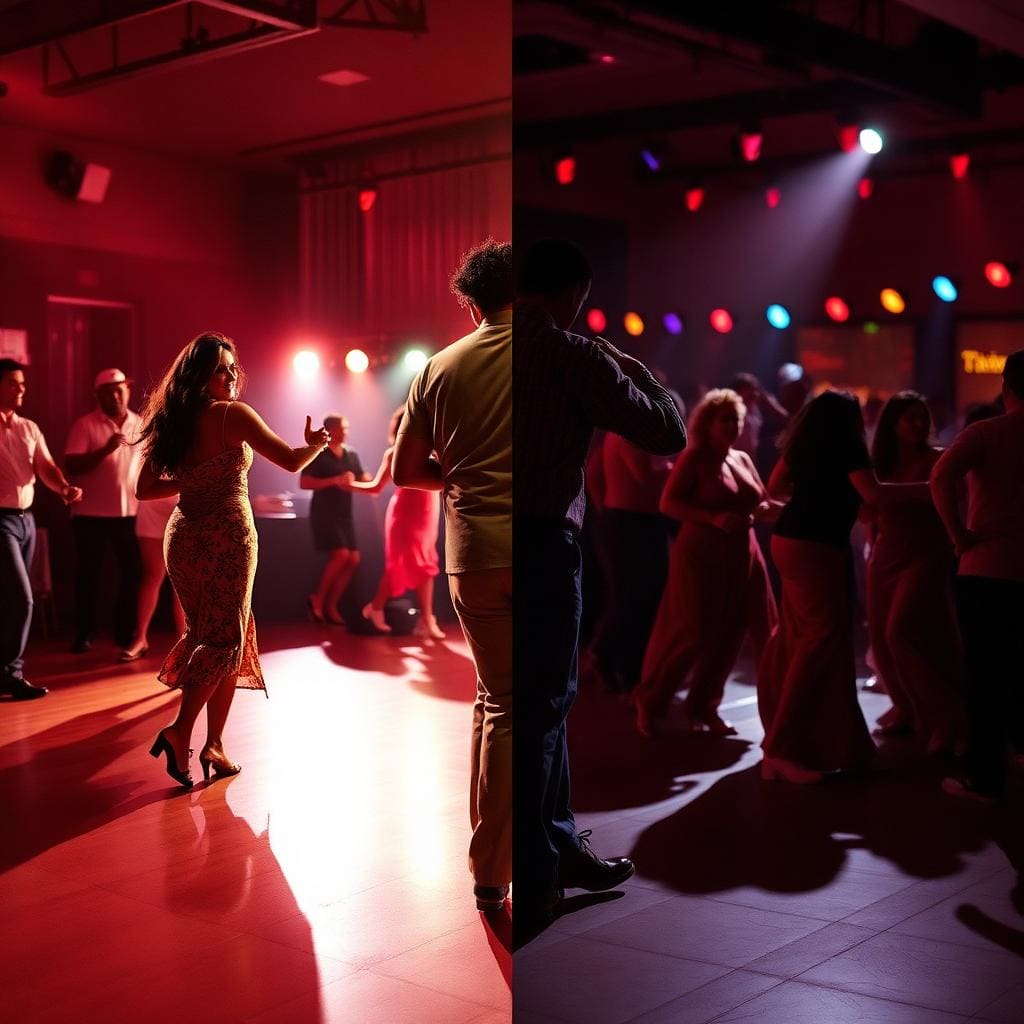
Walk into any Latin social night and you will notice couples that look nothing alike — one couple traveling in a straight line with flashy dips, another gliding smoothly through slow turn patterns, and a third rotating in a small circle with cheeky partner switches. All three are dancing salsa. The three dominant styles are LA (On1), New York (On2), and Cuban (Casino).
LA-style salsa — On1, linear, flashy
Born in Los Angeles in the 1990s, LA-style breaks forward on the 1 and dances in a straight line ("the slot"). It is heavy on choreography-style patterns, dips, and drops — the style you see in most viral salsa videos.
- Timing: On1 — leader steps forward on beat 1
- Shape: Linear (slot)
- Vibe: Flashy, theatrical, high-energy
- Best for: Beginners, performers
New York-style salsa — On2, linear, smooth
Codified by Eddie Torres in the 1980s, NY-style breaks back on the 2, aligning the dancer with the conga tumbao. The result is a smoother, more musical feel that experienced dancers describe as "dancing inside the song" instead of on top of it.
- Timing: On2 — follower steps forward on beat 2
- Shape: Linear (slot)
- Vibe: Smooth, musical, elegant
- Best for: Intermediate + dancers, mambo lovers
Cuban salsa — circular, playful, social
The original — danced in Havana since the 1950s. Couples move in a circular pattern instead of a line, patterns have Spanish names (dile que no, enchufla, setenta), and it is the base style used in Rueda de Casino, where a caller cues an entire circle of couples at once.
- Timing: Usually on the "contra-tiempo" — feels close to On3
- Shape: Circular
- Vibe: Playful, social, community-driven
- Best for: Social dancers, group class lovers
Which should you learn first?
Ninety percent of US studios (including ours) start beginners in LA-style On1 because the count is more intuitive and the basic step is symmetrical. Start in Salsa Level 1, then specialize once your basic is automatic. If you love musicality, go On2. If you love community, jump into Rueda.
Further reading: The full history of salsa.
Frequently Asked Questions
What salsa style should a beginner learn first?
LA-style On1 — most US studios, including ours, start beginners there because the count (breaking on 1) is more intuitive to hear and the basic step is symmetrical front-to-back. You can specialize into On2, Cuban or NY style once the basic is automatic.
What's the difference between salsa On1 and On2?
On1 breaks forward on the first beat of the music, which is easier to hear and is taught first almost everywhere. On2 breaks on the second beat, which lines up more precisely with the clave rhythm and is favored by dancers focused on musicality — but it takes longer to internalize since the timing feels less obvious at first.
Is Cuban salsa the same as rueda de casino?
Cuban-style salsa is the base technique — circular movement, contra-tiempo timing, Spanish-named patterns. Rueda de Casino is a specific way of dancing Cuban salsa in a group circle, where a caller shouts pattern names and every couple executes them simultaneously, often swapping partners around the circle.
More salsa reading
- HistoryWhere Did Salsa Come From?Salsa was born in 1970s New York, fused from Cuban son, mambo, cha-cha and Puerto Rican bomba by the Fania All-Stars. Here is the full story.
- TechniqueWhat Are the Salsa Steps?A plain-English breakdown of the salsa basic step, side basic, cross-body lead, right turn and the first three turn patterns every beginner should know.
- Music21 Most Popular Salsa SongsThe most-requested salsa songs on the social dance floor in 2026, from Héctor Lavoe and Celia Cruz classics through Marc Anthony and Grupo Niche to Cuban timba.