Where Did Cumbia Come From?
The history of cumbia: from Colombia's Caribbean coast to Mexico, Peru and the US Southwest — how a courtship dance became Latin America's shared heartbeat.
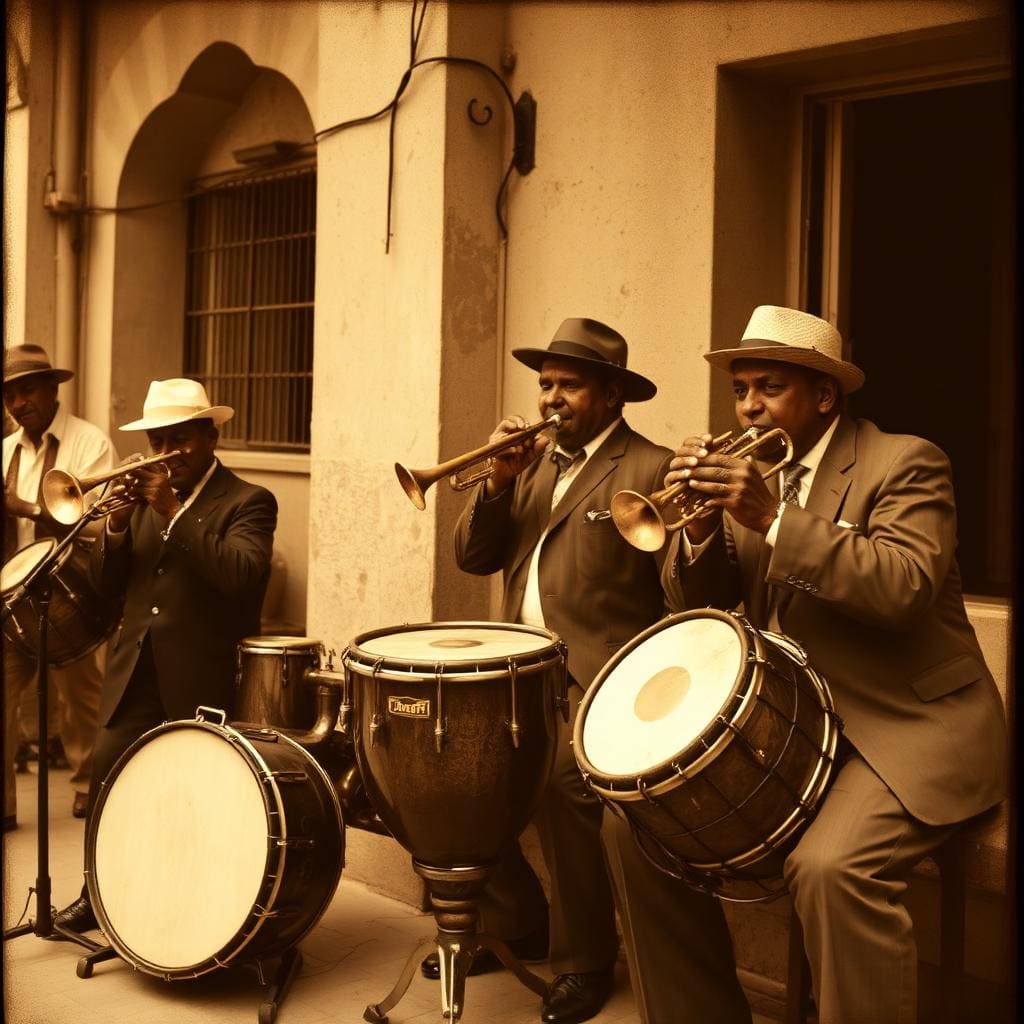
Cumbia has been called Latin America's most democratic music: there is a version of it in nearly every country, and a way of dancing it for every generation. But it started in one very specific place — the Caribbean coast of Colombia.
Colombian roots: three cultures, one rhythm
Cumbia was born in the colonial era from the meeting of three peoples on Colombia's coast: African rhythms carried by enslaved people (the drums — tambora and llamador), Indigenous wind instruments (the gaita flutes and maraca), and later Spanish melodic and dress influences. The original dance was a courtship ritual: men circled women who held bundles of candles, the flames lighting the dance at night — which is why traditional cumbia steps stay small, grounded and circular to this day.
The golden age and the journey north
In the mid-20th century, Colombian orchestras like Lucho Bermúdez's took cumbia from the coast to the ballrooms, and records carried it across Latin America. Mexico embraced it hardest: by the 1960s–70s, Mexican groups had made cumbia their own — slower, heavier on the bass, built for dancing in pairs at family parties. Cumbia sonidera grew out of Mexico City's street sound-system culture, while northern Mexico fused cumbia with norteño accordion. When Mexican families settled across the US Southwest, cumbia came with them — which is why it's the heartbeat of parties from Texas to Las Vegas today.
Cumbia everywhere
- Peru: chicha — cumbia electrified with psychedelic guitars
- Argentina: cumbia villera — gritty, urban, hugely popular
- Chile & Bolivia: their own orchestral and Andean takes
- USA: Selena's Tejano-cumbia crossovers made it stadium-sized; modern acts keep remixing it into pop and electronic music
Why this matters on the dance floor
Because cumbia spread as a social dance, not a competition dance, it never got complicated. The steps you learn in our Las Vegas cumbia class are the same family of steps danced at a Barranquilla carnival, a Monterrey wedding and a Vegas quinceañera — small, circular, joyful. Learning cumbia is less like learning choreography and more like joining a 400-year conversation.
References: For a deeper dive into cumbia's Colombian origins and its spread across the Americas, see the Encyclopaedia Britannica's entry on cumbia.
Want the soundtrack to go with the history? Our essential cumbia songs list runs from the classics to today — or skip ahead and learn the dance itself.
More cumbia reading
- Music20 Essential Cumbia SongsThe essential cumbia playlist: Colombian classics, Mexican cumbia sonidera, Selena's Tejano crossovers and modern hits — the songs you'll actually dance to.
- Beginner GuideHow to Start Dancing CumbiaA step-by-step beginner's guide to cumbia: the rhythm, the basic step, how to find a cumbia class in Las Vegas, and what your first night on the floor looks like.
- Style GuideCumbia vs Salsa: What's the Difference?Cumbia and salsa compared: rhythm, tempo, difficulty, where each is danced, and which one a beginner should learn first in Las Vegas.