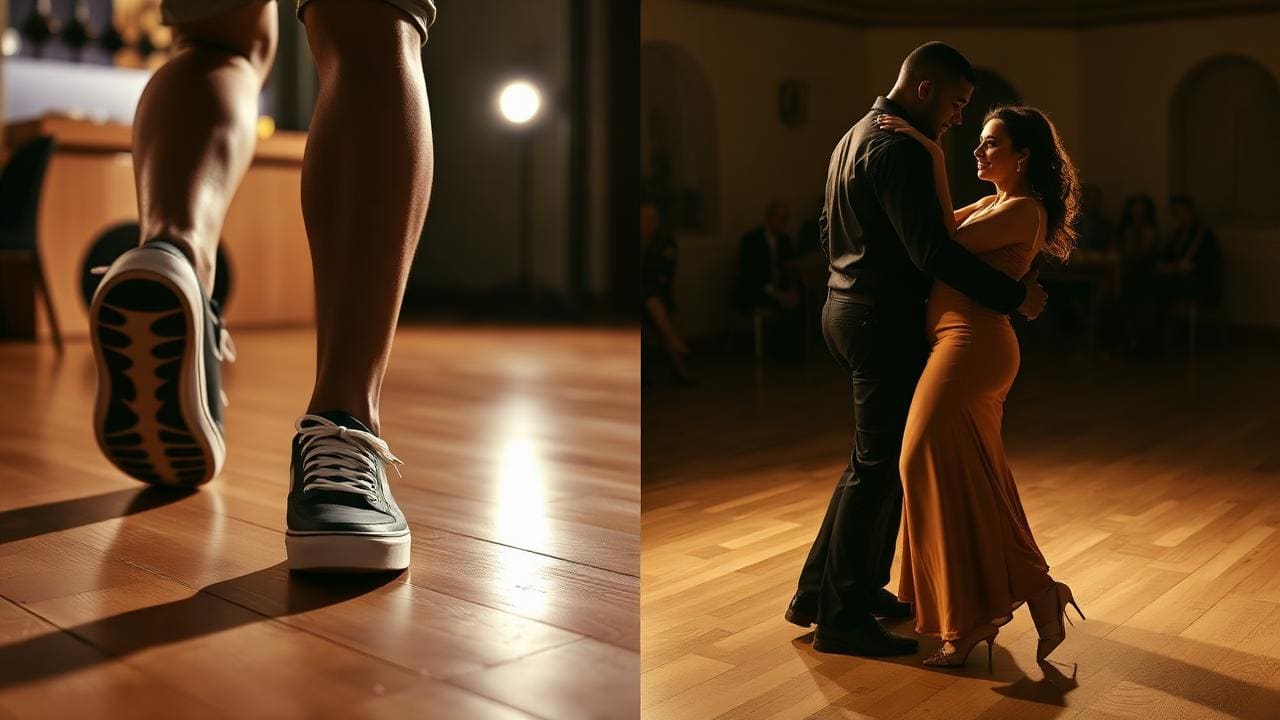
Walk into any Latin social night and you will hear the same question from new dancers: "Wait, why does that couple look completely different from that other couple — aren't they both dancing bachata?" Yes, they are. And no, they are not dancing the same style. The two dominant flavors of modern bachata are Dominican (traditional) and Sensual (modern), and they feel like two different dances.
Dominican bachata — the original
This is bachata as it was born in the Dominican Republic in the 1960s. It is fast, playful, and footwork-driven. Partners stay in an open frame, hips bounce sharply on the 4 and 8, and the leader spins the follower into quick, improvised footwork breaks. Think of it as jazz for your feet — improvisation is the whole point.
- Tempo: Fast (120-140 BPM)
- Frame: Open, hands often free
- Vibe: Fun, cheeky, social
- Music: Aventura's older cuts, Antony Santos, Luis Vargas
Sensual bachata — the modern evolution
Sensual bachata was created in Cádiz, Spain in the early 2000s by Korke and Judith. It borrows from tango and zouk to create a slow, body-led style built around body waves, isolations, and long dips. Partners stay in a close frame the whole song.
- Tempo: Slow to mid (100-120 BPM)
- Frame: Close, connected torso
- Vibe: Romantic, cinematic, expressive
- Music: Daniel Santacruz, Bachata Heightz, Grupo Extra
Which should you learn first?
Most Las Vegas studios (including ours) teach a hybrid modern bachata that pulls the footwork foundations from Dominican and the flow from sensual. Start there in Bachata Open Level, then specialize once you know the basic. If you love footwork, book a private in Dominican bachata private lesson. If you love flow, go a sensual-style private.
Further reading: The full history of bachata and popular bachata songs for both styles.